Thursday, September 3, 2009

Everybody Put Your Best Suit or Dress on

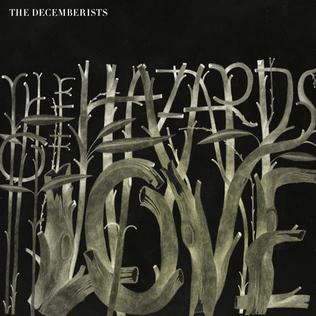
Suit up, folks! It's Friday, and that means it's "ALL HAIL (THE CONCEPT ALBUM)" day! Last week, we spotlit the very brainy, obtuse album, "The Hazards of Love" by the Decemberists. Some concept albums try to cram complex ideas and plots into some grandiose story. However, today, I'd like to showcase the other side of concept albums--simple thematic ties and overall cohesion of sound--with indie quartet Death Cab for Cutie as our shepherd.

Without further ado, ALL HAIL TRANSATLANTICISM!


Where does this stuff come from? After three albums of low-fi, indie-shoegazer anthems, Death Cab decided to design an album that flows from beginning to end, rather than a collection of songs--with beautiful results.

...And your point is? The album is a loose depiction of the narrator's life after his girlfriend abandons him in favor of the promise of Eurasia. The resulting effect of being separated by an ocean is the invented word, "Transatlanticism." The narrator reminisces about the good times they had, is plagued by reminders of their former connection, and ultimately blames his ex-lover for his current disposition. Various vignettes of melancholia and yearning lead to the two-part finale--the jarringly aggressive "We Looked Like Giants" and the slow unfurling of "A Lack of Color--where the narrator realizes that his actions drove his love away, leaving only himself to blame. It's a unique take on the standard "emo" fare, one that is both touching and thought-provoking--without being cliched.

Tell us what you really think (my 50-word review).
DCFC’s ”Transatlanticism” is an amazing exercise of combining polar opposites. Emo without the whining, introspective verses with huge choruses, and catchy with brains; the album’s triumph comes from its modesty. Simple electric-acoustic songs tied together with ambient sound take the listener on a journey into multi-layered heartache. Repeat listens demanded.

If you only listen to one song on the album...
Choose the title track, "Transatlanticism." Not only does it encapsulate the plot of the album, it provides a sonic blueprint--minimalistic sound effects giving way to plaintive melodies and a slow-build to stadium-worthy resonating chords and an iconic chant. If any song can capture the entire breadth of Transatlanticism, look no further than this terrifically epic tune:


For those of you well-versed in Death Cab, what's your take on this LP? And for the uninitiated, are you encouraged to learn more? Sound off!!!


Tuesday, September 1, 2009

Yes, I Love Technology, but Not as Much as You, You See...

Welcome to "Technology Tuesdays"! Every day of Tues, I will highlight an important website, electronic device, or random curiosity that is important to music--as well as let you know what new music is hitting stores.

Today, I am highlighting Metacritic.com's music section. If you're not familiar with Metacritic, you need to get on it. It compiles reviews of music, movies, video games, DVDs, and TV shows, and assigns each review a numeric score from 1 (garbage) to 100 (classic). Then, it takes an average of all the scores to give you the overall critical score average for the product. Specifically to music, it is very important to read multiple reviews (and do YouTube research) to truly understand the dynamics of an album and what makes it unique.

Reading one review from one source will not tell you anything. For example, Rolling Stone gave Eminem's Relapse a 4-star review. It must be pretty great, right? Well, let me put it this way. Every Eminem album since The Marshall Mathers LP has earned a four-star rating. So let me get this straight... The Eminem Show is in the same league as Marshall? No. Rolling Stone loves Eminem. That's it. If a critic loves you, you will (almost) always get favorable reviews. That's where Metacritic comes in. Relapse's Metacritic score is 58--out of 26 reviews, only seven rate it above 60. By reading more, you'll learn that, while Relapse certainly boasts some killer tracks (pun intended and duly noted), it isn't anywhere close to a masterpiece and has numerous flaws.

So... That's Metacritic.com, the first feature of "Technology Tuesdays"! And here's some of your fresh choices at the music store today (which may or may not be from a list at Metacritic)...

Black Crowes' Before The Frost.....Until The Freeze
Whitney Houston's I Look To You
Insane Clown Posse's Bang Pow Boom
Juliette Lewis' Terra Incognita
The Used's Artwork
Andrew WK's 55 Cadillac

Go get 'em (or in some cases, not), tiger!

Monday, August 31, 2009

Rockin' and A-Rollin', Rockin' and A-Reelin'

Welcome to the new and improved "Mutiny Mondays"! Wait, don't go!!!

After the infamous "Rolling Stones-gate" of yester-weeks, I have made significant changes. No more dissing bands, since everyone's tastes are different, and honestly, what's the point? No more dissecting everyone's rebuttals, since my voice is already prominent on this blog. The comments section is for YOUR voice, and the best opinion will be featured on this post as part of the Stereo Plasma canon. No more [negative aspect], since [some reason why the negative shouldn't be on this blog].

I will take some idea or viewpoint regarding music and discuss why I agree/disagree with it, in terms of its impact on music. Here is today's topic of discussion:

"Music Games Are Killing Music"


Why do people think this? Do a simple Google search, and you've got a day's worth of reading about why "Guitar Hero" and "Rock Band" and the ilk are evil. According to one article, they point the finger at countless sequels that encourage playing rock songs instantly. If one can play "Free Bird," for example, perfectly at will on a video game, will they ever want to pick up an instrument and do it in the "quote-unquote "Real World" close-quote?" Furthermore, they argue that the technology will dumb-down the future of music, reducing music to "six chord songs because of a generational lack of musical proficiency caused by these games."

Why does Stereo Plasma beg to differ? For a multitude of reasons:

1) I love music, and I also love video games. Let's face facts. Despite how much we may want to, we can't rock out every second of the day. Video games are terrific escapism, and what better way to waste your time than to interact with music you love while playing games? There is no other medium that allows you such connectivity. You are playing along with popular artists on their own songs! And you can involve your friends. It promotes social encounters and is interactive on an unprecedented level! Heck, you might even...

2) Discover new artists. Each new music game offers dozens of artists' songs for you to intensely interact with on vocals, guitar, bass, and drums. Less musically aware individuals will be learning about artists past and present for the first time, and everyone will be able to focus on each portion of the song, all working towards a greater understanding of the overall artistry of the tune. I have heard stories of kids becoming huge fans of Metallica, Pixies, Coheed & Cambria, and countless other groups because of music games. Screw the purists! A fan is a fan, regardless of how he/she/it is acquired.

3) It inspires people to do-it-themselves. Certainly, this fact won't hold true for the vast majority. However, if someone didn't have the inkling to pick up an instrument before and then was inspired by the game to do so--even ONE PERSON out of the MILLIONS OF PEOPLE who have played the game--that is an incredible feat. I, for one, decided to pick up the drums after "Rock Band" came out, and then barely played "Rock Band" since. And I can't understate how profoundly I was affected by learning an instrument. Music is such an important and unique aspect of humanity, and for anyone to be inspired to create music because of a game, that's a success. And as for the argument that "Guitar Hero" and friends are stopping people from playing instruments, they obviously don't understand the power of music. If you have the desire to play music, there is no substitute. And even if someone was THAT lazy, who cares? It's their loss.

Sure, some kids will be annoying, and act like they have some incredible gift by being able to hit buttons in a rhythmic fashion, and diminish the importance of playing a real guitar. It's entertainment, a facsimile. Just be glad that they care enough about music to play a game solely devoted to hitting buttons to duplicate notes. They could be stealing virtual cars, slaying demons, flying planes, and shooting Nazis, but no, they have chosen to interact with music. Regardless of what their intention is in playing, I just can't shake how awesome it is that music is in their lives, even if it is through plastic strum bars.

Now it's your turn. What do you think? Am I totally off-base? What am I not seeing? Or has your musical appreciation been improved thanks to music games? The floor is yours, whether you agree, disagree, blindly praise me, or play devil's advocate. Sound off!

Wednesday, August 19, 2009

...And That's How I 'Came Your Humble Narrator

As a blog devoted to celebrating greatness in music, I am pleased to introduce a new weekly feature, "ALL HAIL (THE CONCEPT ALBUM)!" Once during each seven (7) day period, I will herald an album that boasts a central theme or musical/lyrical continuity throughout. For a more thorough explanation of the concept of concept albums, bow down to the WikiGods.

Today, the Decemberists' most recent effort is the subject of admiration. ALL HAIL THE HAZARDS OF LOVE!


Who writes this stuff? Indie folk band The Decemberists, along with knockout female vocals from Lavender Diamond and My Brightest Diamond frontladies, guitar from cult icon Robyn Hitchcock, and more!

What's the story (morning glory)? A Shakespearean tragedy akin to "Romeo and Juliet," except Romeo is a shape-shifted fawn-cum-human named William. A fair maiden named Margaret encounters William as a injured fawn in the forest and, upon fixing his leg, finds the fawn to be a human. She does what any normal girl would and winds up impregnated by the man-beast.

William's mum, the Queen (of the actual forest), is displeased with the William's interactions with human world. She hires a human named The Rake to kidnap and molest Margaret as punishment to William. The Rake (no stranger to crime, including infanticide) obliges, and William (ignorant of his mom's actions) begs the Queen to let him rescue her, allowing her his "life for the evening ... [to] retake by morning."

William then makes a deal with the treacherous water surrounding Margaret that the water may drown him on his return trip if it allows him safe passage to his love. When William encounters the Rake, the ghosts of his three children take their revenge and murder their father. As our star-crossed protagonists board their sea vessel, they realize that only in death can they peacefully be together, so they hold an impromptu wedding as the water claims their lives.

Why should you care (my 50-word review)? The Decemberists always leaned on grandiose lyrics, stellar melodies, and a deference to the archaic. On The Hazards of Love, they meld such cornerstones perfectly-with some surprises. They contrast Pink Floyd-esque folk-psychadelia, Black Sabbath guitar thunder, and powerhouse female vox for intense auditory drama. A masterpiece meant for the stage.

If you only listen to one song on the album... Make it "The Wanting Comes in Waves / Repaid." It's everything great about the LP in 6:26, showcasing the album's biopolar tendencies to maximum effect.


What do you think? Have you already heard this album? If you haven't, are you moved to?

Let's talk, kids.

Friday, August 14, 2009

I Don't Know Why You Say Goodbye, I Say Hello


R.I.P. 1915 - 2009

Yesterday, modern music lost one of its founding fathers. Les Paul died at the ripe old age of 94. Yes, he has a guitar named after him. But also, as Rolling Stone puts it, "Paul is credited as the inventor of the electric body guitar and the pioneer of recording techniques like electronic echo and multi-tracking." And he did this all in 1940s! An innovator and an inspiration to countless guitar players, including guitar luminaries Eddie Van Halen, Slash, and the Edge.

So today, pay tribute to Mr. Paul by reading about his legacy and listening to his groundbreaking "Lover (When You're Near Me)," in which Les Paul INVENTED MULTI-TRACKING!


So when you listen to your modern bands in the coming days, realize that what you are hearing may not have been possible without this man.

Thursday, August 13, 2009

If a Picture Paints a Thousand Words, Then Why Can't I Paint You?

Today, we are going to discuss the lost art of (pardon the redundancy) album art. Why? Because the artwork for Wolfmother's upcoming Cosmic Egg (see below) has been unveiled, and with that, my emotions regarding the format have stirred quite violently.


For me, this is an incredible cover. It invokes such awe and power, leaving one to only imagine that the music it represents much be equally as audacious and epic. That is the purpose of good album art. Similar to what a movie poster should do, album art sets the tone for your experience. In some cases, album art even overshadows the music itself. Think about Pink Floyd's Dark Side of the Moon. I doubt you thought about the menacing sound collages that tie the tracks together or the emotional catharsis that is "Eclipse," although those are the lasting impacts of the album on me. You probably, like me, saw this:


The simplicity of the cover, the use of dark space, and the iconic splitting of the beam of light all work towards representing the sonic properties of the album visually.

However, for how important album art can be, as the industry shifted formats, the art that once demanded two hands to hold and view was reduced to a hand-held cassette. Although still small, the slightly larger CD medium brought album art back to its original shape, but in the wake of vinyl, it pales in comparison. Now as the medium shifts swiftly towards total digitization, I fear for album art's future. Because for me, the art is just as big of a part of the album as the music itself--when executed properly, that is.

So let's celebrate our favorite album covers of past and present. Sound off below and list at least one album cover pre-90s and one album cover 90s to now that has significant meaning to you.

For me, I'll contribute the historic cover for the Beatles' Sgt. Pepper's Lonely Hearts Club Band and the Mars Volta's De-loused in the Comatorium. The former is mentioned for its complexity, scope, and hidden messages; the latter, its sheer macabre simplicity.

If you find the picture online, be sure to post a link so any uninitiated can celebrate your favorites.

Wednesday, August 12, 2009

It's Been a Long Time Since I Rock and Rolled

Holy supergroups, Batman! Allow me to introduce Them Crooked Vultures.

Sir David Grohl of Foo Fighters fame plays on the drums (little known fact: before serving as singer/rhythm guitarist for the Foo Fighters, Grohl played drums for indie band Nirvana).

Mr. Joshua Homme III of Queens of the Stone Age and the Desert Sessions will handle vocals and guitar.

And lastly....

Esquire JOHN PAUL MOTHER-LOVIN' JONES of Led Zeppelin on bass!!!

If that doesn't do anything for you, check out this very generous 14-second clip of the band's "Nobody Loves Me and Neither Do I."


Wow. For how face-melting awesome that tidbit was, I am expecting to lots of hard-hitting syncopated jams followed by relentless punches to the face. The band's Wikipedia page classifies the trio as hard rock, which is interesting to note since Jones always strayed from that title with Zeppelin. I can't find the source, but I recall that Zeppelin refused the title of a hard rock/metal act since "over half their songs were acoustic." So if that's any indication, this amalgamation should stray away from the softer side of rock, unlike the Foos and Zeppelin. And with these three at the helm, I wouldn't want it any other way.

What thinkst thou? Are you excited yet? Sound off and let me know some of your favorite supergroups!